For hair that is thinning rather than gone; pigment placed between your existing follicles so the scalp stops showing through, without shaving your head and without anything to apply each morning.
Free consultation with a shade and density assessment. You keep your hair; this works with it, not instead of it.
2+ years' hands-on experience
Every session carried out personally by Brett McMullen, the clinic's sole practitioner.
Trained at North West Scalp Clinic
Certified scalp micropigmentation training in Bolton, with the certificate on display in the clinic.
Licensed and fully insured
Local authority licensed, with public liability and professional indemnity cover in place.
Free consultation, no obligation
An honest assessment before any money changes hands, including being told when a treatment is not right for you.
The treatment
Density work for thinning hair, explained
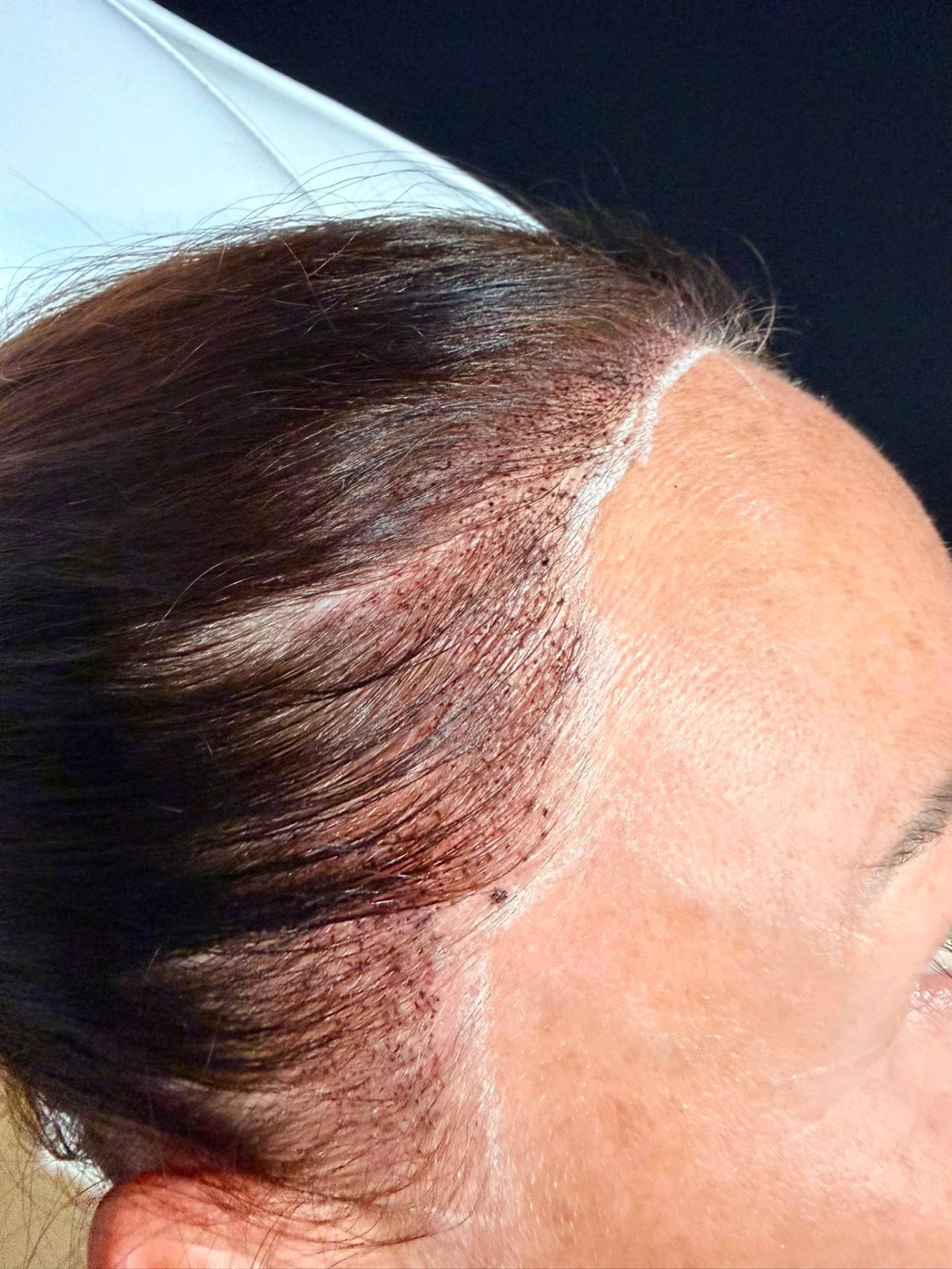
Thinning is a contrast problem before it is a hair problem. What people notice is not the missing follicles but the pale scalp showing between the ones you still have, particularly under overhead lighting. Density work fills that contrast in: pigment is deposited between existing hairs at matched depth and tone, so light stops bouncing off bare scalp and the hair you still have reads as considerably thicker.
You keep your hair
Nothing is shaved. The treatment works alongside your existing hair, which is why it suits men and women in the early and middle stages of thinning.
Contrast is the target
By darkening the scalp between follicles, the gaps stop reading as gaps. The visual effect is fullness, achieved without adding a single hair.
Suits women as well as men
Diffuse thinning through the parting and crown is treated the same way, with lighter, softer application matched to finer hair.
Works with transplants
Density work is often used to support transplanted hair, adding apparent thickness between grafts once healing is complete.
What waiting costs you
The cost of waiting and of quick fixes
Thinning rarely stops on its own, and the products marketed at it mostly manage the appearance for a few hours at a time while costing money indefinitely.
Fibres, powders and sprays
They work until it rains, until the gym, until someone puts a hand on your shoulder. The cost also never stops, and the daily routine becomes something you plan your morning around.
Lighting anxiety
Overhead lights, phone cameras and strip lighting in shops all expose thinning. Clients describe choosing where to sit and how to stand long before they describe the hair itself.
Poorly matched pigment
Density work applied too dark or too heavy on fine hair looks like a shadow rather than hair. Matching tone to your existing shade is the whole job.
Mistakes we see most often
Assuming SMP means shaving your head: density work does not.
Spending years on fibres rather than pricing a permanent option once.
Booking density work somewhere that treats fine hair like a shaved crown.
Expecting a single session to finish the job.
Going too dark in the first session out of impatience.
Neglecting sun protection afterwards, which fades pigment faster.
The process
How density work is carried out
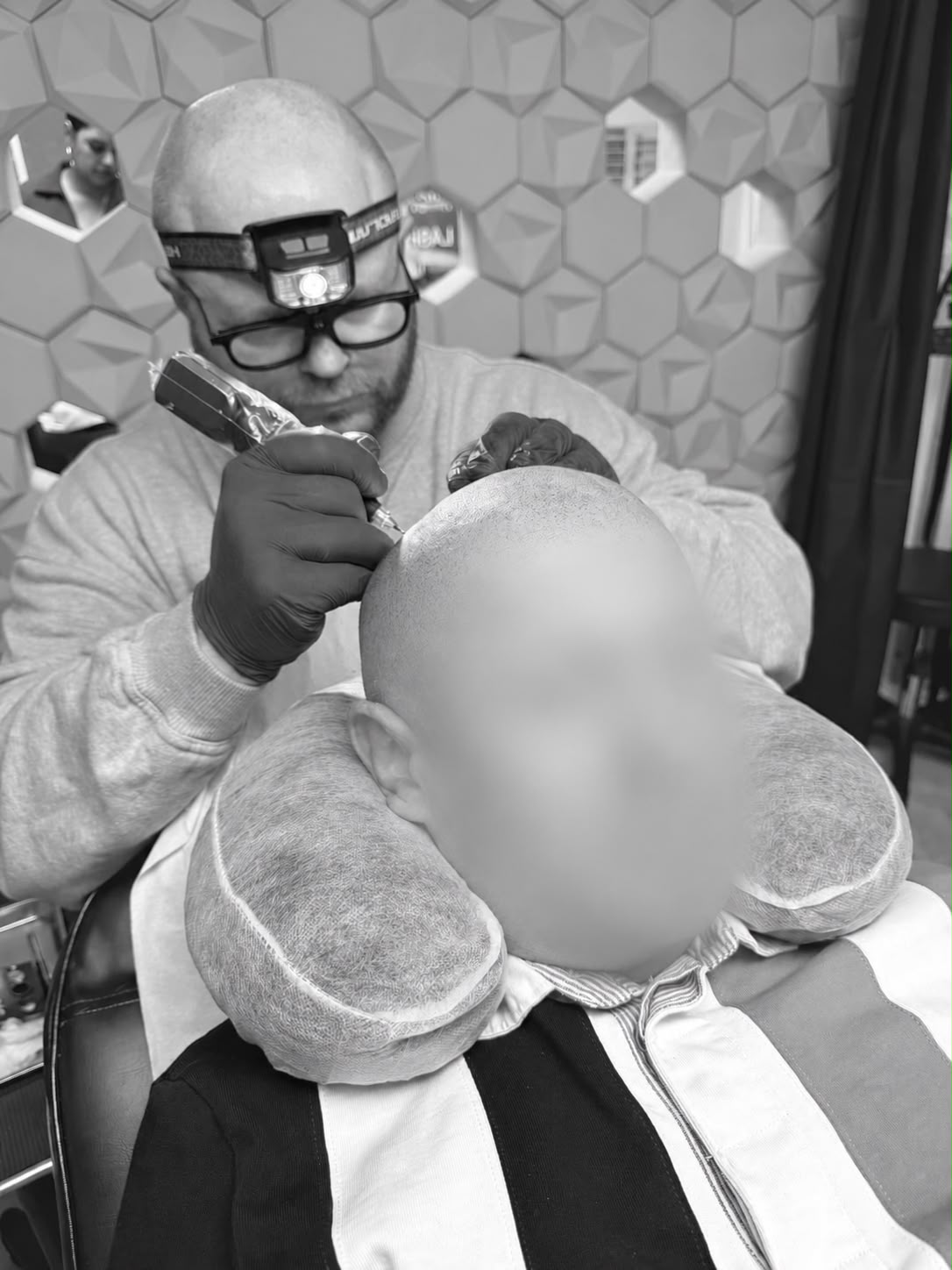
Light passes, built up gradually. Fine hair shows every mistake, so the approach is deliberately conservative.
Perceived thickness comes from how much scalp is visible between hairs, not from hair count. Reduce that visible scalp and the same head of hair looks substantially fuller.
This is why density work can transform a thinning crown while the hair itself is unchanged: the eye reads shadow between follicles as more hair.
Placing pigment between existing hairs
Impressions are placed in the gaps rather than over follicles, at a matched depth so they sit at the same visual plane as your hair.
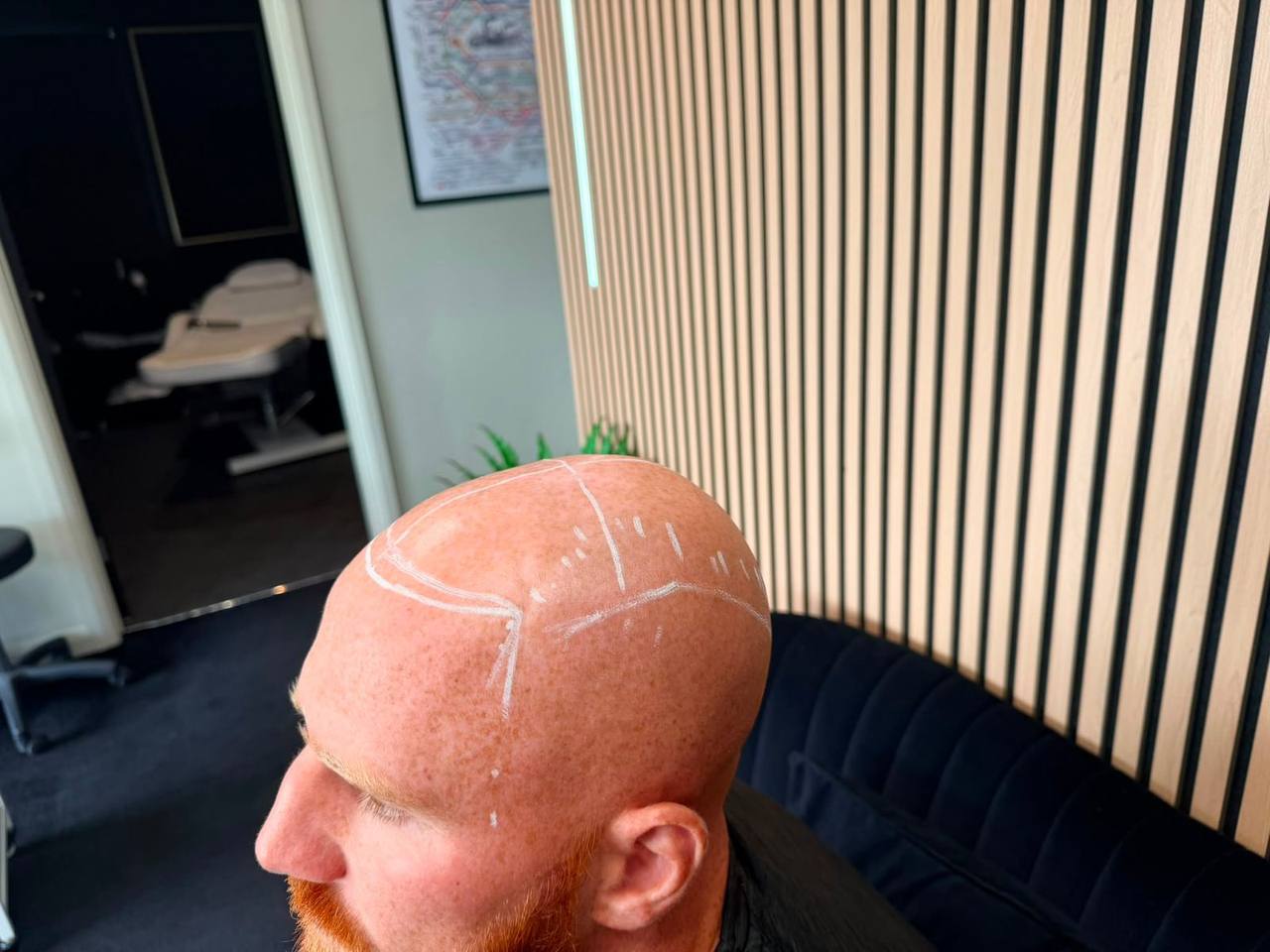
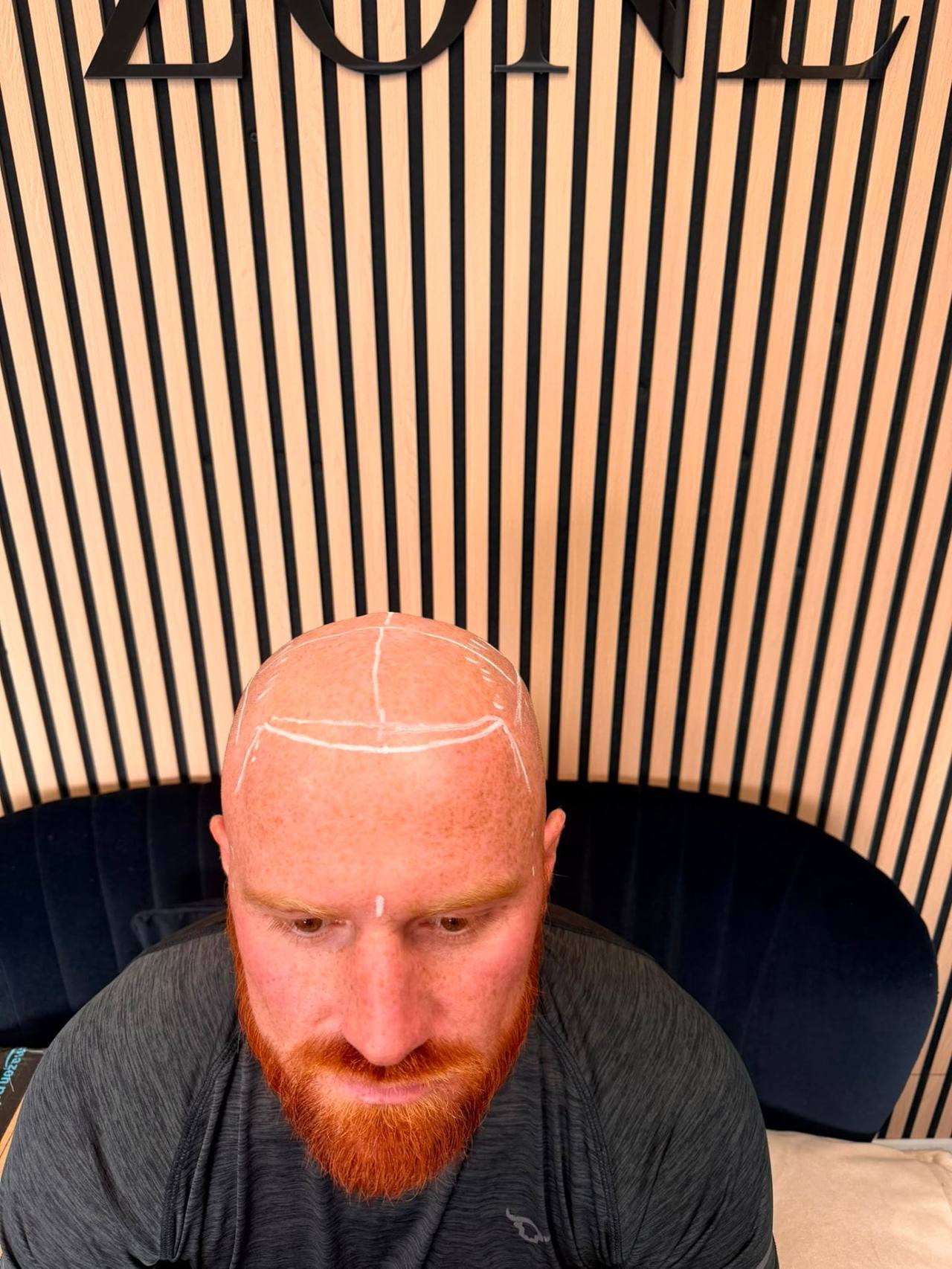
Angle and spacing follow your natural growth pattern, including the whorl at the crown, which is where careless work is most obvious.
Matched depth and spacing
Growth-direction aware placement
Crown whorl followed, not ignored
Blended outwards into unaffected areas
Fine and light-coloured hair
Fine, blonde and grey hair needs heavily diluted pigment and lower contrast, or the result reads as a shadow rather than density.
For these clients Brett works across more sessions with lighter passes, because correcting over-saturation is far harder than adding another pass.
Density for women
Female pattern thinning typically widens the parting and thins diffusely across the top while the hairline stays intact.
Treatment concentrates on the parting and mid-scalp, applied softly so the effect is fullness rather than a defined shape. No shaving is involved at any stage.
Alongside transplants and ongoing loss
Density work is frequently used after a hair transplant, once fully healed, to add apparent thickness between grafts and soften donor-area thinning.
If your loss is still progressing, that is discussed openly at consultation: the plan accounts for it rather than pretending it will not continue.
Aftercare and longevity
No washing, sweating or sun on the treated area for the first few days, then a return to normal routine with sunscreen or a hat on bright days.
Pigment softens over several years. A short touch-up restores contrast; the pattern itself does not need redoing.
Density treatment pricing
Free
Consultation & shade match
Includes a test area if you want one.
£1,200
Full SMP treatment plan
Density work included within the full scalp micropigmentation treatment.
On enquiry
Partial or crown-only density
Quoted at consultation based on the area treated.
Smaller density areas are quoted individually. Ring 07426 938460 or send an enquiry and Brett will confirm a figure before you book.
Questions
Density treatment questions, answered honestly
Anything not covered here, ask Brett directly on 07426 938460.
Do I have to shave my head?
No. Density work is designed for people who still have hair. Pigment is placed between existing follicles and your hair stays exactly as it is.
Does it work on women's thinning hair?
Yes. Diffuse thinning through the parting and mid-scalp is treated with the same technique at lower contrast, matched to finer hair.
Will it look darker than my own hair?
It should not. Pigment is diluted to sit slightly softer than your natural shade, and the first session is deliberately light so tone can be judged after healing.
How many sessions will I need?
Usually three, spaced for healing. Fine or light hair sometimes benefits from an extra light pass rather than fewer, heavier ones.
What if my hair keeps thinning?
That is discussed openly at consultation. Density work can be extended later, and the plan is built with continuing loss in mind rather than around a hope that it stops.
Can I have it after a hair transplant?
Yes, once healing is complete. It is commonly used to add apparent thickness between grafts and to soften the donor area.
How much does it cost?
Density work forms part of the full scalp micropigmentation treatment at £1,200. Crown-only or partial areas are quoted at your free consultation.
Is it permanent?
It is long-lasting rather than unchanging. Expect several years before it softens, then a short touch-up appointment.
Can I still dye or cut my hair normally?
Yes. Once healed, your usual routine carries on. Very short clipper work will expose more scalp, which is worth discussing at consultation.
Where do you treat clients?
At the Workington clinic, Unit 6, Kerry Park Industrial Estate CA14 3TT, with clients travelling in from across west and north Cumbria.
Bring your hair as it is. The consultation is free, includes a shade match, and you will be told plainly whether density work is the right treatment for your stage of thinning.
Consultations are free and carry no obligation to book.
You deal with Brett directly: the same practitioner from first call to final session.
Treatment room at Unit 6, Kerry Park Industrial Estate, Workington, with parking on site.
Evening appointments until 8pm Monday to Friday, plus Saturday mornings.